
About
I run JDWA. Local SEO and web design for UK trades, done by me personally.
I'm a solo operator running local SEO and web design for trades and service businesses across the UK. You'll always be talking to the person actually doing the work. Not an account manager relaying to someone else, not a junior who started last month, not a contracted-out vendor.
The business is run with a hard cap of 30 retainers clients. By design, not by accident. That cap is what lets me write every deliverable myself: GBP posts, review responses, monthly reports, audit summaries, the lot. I personally review and edit before anything reaches you or goes live.
The cap also gives me the quiet to take the work seriously. Every monthly report is personally edited before it ships, every review response gets a human pass-through, every GBP post is reviewed for tone and accuracy. The dashboard surfaces every action so you see what I'm doing about it.
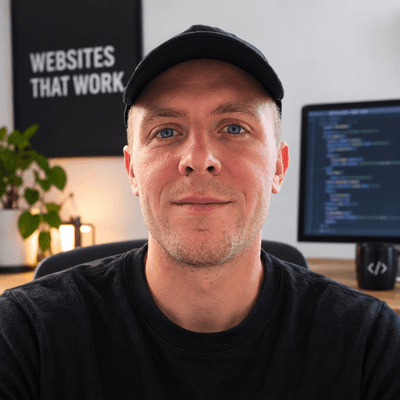
Simon Jackson
Sole operator
Based in the UK. Serving trades, healthcare and local service businesses across the country.
By the numbers
30
retainer cap (by design)
48hr
baseline audit SLA
24hr
response time SLA
1
founder
Topics I am known for
AEO and GEO are 2026 additions to the practice — the rest is the work I've done since founding the studio.
How JDWA came to exist
I lost every client in 2020. That's why the model is what it is now.
Before COVID I ran local SEO for businesses with physical stores. Plumbers, dentists, MOT garages, takeaways, salon chains. The work was the same work the platform does today — get the shop showing up when someone three streets away searches on their phone for what you sell. The model was simple: monthly retainer, the founder does the work, the client sees every action in a dashboard.
Then 2020 happened. The shops shut. The whole world shut. Every client cancelled within six weeks because there were no customers to walk through the door and nothing I could do would change that. Local SEO can't bring customers to a shop that's legally closed. I had no revenue and no prospects because the prospect base itself had disappeared overnight.
I had to keep money flowing so I went back to what I knew from college: hands-on engineering work. Access control systems and vehicle mitigation — automatic bollards, rising kerbs, ANPR, barrier arms, the physical side of keeping sites and depots secure. Self-employed, freelance, on the road. Different problem space than local SEO but the same kind of small-business rhythm: quote, do the work, invoice, keep the van running.
What the engineering years actually gave me was the view from the other side of the desk. Running my own trades business meant I watched exactly how local businesses got found — or didn't. I had maintenance contracts with site owners, and a chunk of them came from Google Maps. The ones who showed up in the 3-pack had paying customers calling them every week. The ones who didn't had empty vans. Same trade, same area, same skill. The only difference was whether anyone on the internet could find them when the boiler leaked at 8pm.
The gaps I saw in those years are exactly what this platform closes. Tradespeople who couldn't get a website to rank because they didn't know what schema markup was. GBP profiles that hadn't been touched in two years and were losing to a competitor who'd never even met their customers. Citations on directories that had closed but were still showing up in search results with the wrong phone number. Reviews going unanswered for weeks because the owner was on a job and didn't have time. None of those problems were technical. They were all "nobody is doing this for me because I don't know it needs doing". The platform does it for them.
When I came back to local SEO I didn't restart the old model. I rebuilt it from scratch with everything I'd learned. The result is what you see now: every client gets a complete dashboard, not a monthly PDF that needs interpretation. Every piece of work is recorded and visible. The retainer cap is enforced in code, not in a sales meeting. Pricing is published, not quoted. The audit is free because the bar is to be the right fit, not the next sale.
If the same thing happens again — and god forbid that it does — every client keeps their dashboard, their citations, their GBP, their content. Nothing is held hostage because the data lives with the client, not inside JDWA. That wasn't true of the old model. It is true of this one. The whole point of rebuilding was to make the next pandemic a problem for the platform, not a problem for the client.
Brand ethos
Personal, not biggest. But the work is mine, not an account manager's
The bar internally is to actually be the best at what I do, even though externally the tone stays understated. The service is the strongest local SEO, the most complete dashboard, the fastest response times of any agency in the niche. And the website does not make the claim in the copy. You prove it through results, not by asserting it in the headline.
The site you are reading is built that way. Schema markup across every page type, internal linking built around hub-and-spoke, Core Web Vitals in the green, copy that reads like a human because it was written by one. Every client site gets the same level of work, whether it ships as the Technical SEO Foundation (the bounded audit + fix project), the ongoing local SEO retainer, or the Website build itself.
That distinction is what the marketing superlatives actually undermine. They persuade nobody who is paying attention, and they undercut trust in the person who uses them.
What you will hear instead: the work happens, the dashboard shows it, and the next monthly report comes with a personal note explaining what changed and why. I prefer substance to persuasion. That is the bet.
How I work
What gets delivered, what gets reviewed, what you see
I write it myself
Audit summaries, monthly report narratives, social post drafts, review responses, blog outlines, link outreach copy. The cap on clients is what lets me do this rather than supervise a process that does.
I review and edit
Every deliverable passes through my hands before it reaches you. Consistency, tone, and judgement live in that pass. The first version is never the final answer.
You see every step
The dashboard surfaces every action: rank changes, GBP posts, citations, review responses, backlinks acquired, AI visibility mentions. You log in any time and see exactly what's happening.
Engage as much or as little as you like
Some clients open the dashboard daily, some never look at it. Both are fine. The work is the same either way: written, reviewed, published by me. The dashboard is transparency for clients who want it, not a participation requirement.
30 clients, no exceptions
The cap is enforced in the backend, not in marketing. A client asking for service above the buffer waits for the next churn slot. I'd rather lose a deal than take on work I can't do properly.
Who this isn’t for
Here's when we're the wrong fit.
Read this before you book the call. It saves both of us an hour.
All you need is Google Ads and a phone that rings.
If your whole model is the phone ringing with a burst pipe at 11pm and you already have a fully-built Google Business Profile, a tight Google Ads campaign bidding on ‘emergency plumber near me’, and an answering service that picks up — you don't need a 30-retainer agency keeping the lot. You need a smaller ads-only specialist who will run the campaigns for less than half my retainer. If your GBP is half-built, you're getting no clients through the search channel, your website isn't ranking for the trades you actually serve, and your ads are generic, that's a different conversation; if the basics are sorted and you just want someone to keep them running, I'm not the right fit.
You want first-page rankings in 30 days.
Genuinely, that's not how organic local SEO works. If someone promises it, they're either buying you ads and calling it SEO, or they're about to do work that gets the site penalised. I won't pretend otherwise in a sales meeting and I won't start work I can't deliver on.
You want the cheapest option available.
The cheapest local SEO option is £80/mo from someone working 200 clients at once. They'll automate your GBP posts, never look at your account, and disappear when you ask why your rankings aren't moving. I'm not cheap. I'm not the most expensive either. I'm priced for the work actually being done by the person whose name is on the invoice.
You have a working in-house SEO team already.
Good. You don't need me. If you're hiring because a junior left and you need cover for three months, I can help. If you're hiring because your existing team is stretched on the technical side and you need someone to own local pack and content specifically, I can help. Otherwise the engagement will be redundant and I'd rather pass.
You're a multi-location chain with 50+ branches.
The cap is 30 retainers. I can't run 50 branches individually at the depth the work requires. An agency with a 50-person ops team is the right call. If you have 3-5 branches in a single region I can absolutely help. Beyond that, the model stops fitting and I'll say so.
If none of those applied and you run a single-location trades or service business with a real shop, real service area, and a website that needs honest work to rank — the audit is below.
Want to talk to me directly?
No account manager, no sales team. Me. Book a free audit and I\'ll talk through your situation honestly. If engaging makes sense, we agree next steps; if it does not, we agree that too.
Get a free auditCommon questions
About JDWA — frequently asked questions
- Who runs JDWA?
- Just me — Simon Jackson. I am the only person who touches your account. No account managers, no juniors, no offshore team. The advantage is continuity and accountability. The disadvantage is capacity: I cap the work at 30 clients and there is a waitlist. I do not subcontract. If I am sick, your work waits; that is a real cost of the model.
- What does the founder actually do day-to-day?
- Four recurring jobs, in roughly this order of time. (1) Auditing: 4–8 hours per new client, then monthly refresh on the existing clients. (2) Hands-on fixes: copy, schema, GBP posts, review responses, technical SEO patches. (3) Reporting: monthly write-up per client, plus ad-hoc on traffic events. (4) Sales: discovery calls, audit follow-ups, contracts. Anything that is not one of those four is delegated, automated, or not done.
- Why a solo studio instead of an agency?
- Agencies sell hours at scale. The economics push them toward junior staff, account-manager relays, and templated deliverables. Solo studios sell direct expertise. For a UK trades or home-services business, the work does not need scale — it needs consistency and a single person who knows the account. That is what I offer.
- What kind of clients does JDWA work with?
- UK trades and home-services businesses with one location and 1–20 employees. Plumbers, electricians, roofers, locksmiths, builders, dentists, accountants, solicitors, physiotherapists, chiropractors. The sweet spot is a business that is established, knows its numbers, and wants to grow — not a startup that does not yet have a baseline to optimise.
- Where is JDWA based?
- I work remotely from the UK. Most communication is over the dashboard and email. I do not do on-site visits — the work is digital and the tools (Search Console, PageSpeed, GBP, the dashboard) are all remote-access. For strategy calls we use a video meeting; for quick questions, the dashboard has a notes thread per task.
- How do I know if JDWA is right for my business?
- Three signals. (1) You already have a Google Business Profile and a website, even a basic one. (2) You can tell me your monthly lead count and your average customer value. (3) You are willing to invest 6–12 months in growing the digital channel. If those three are true, the free audit is the right next step — I will tell you honestly whether I can help, and if I cannot, I will suggest someone who can.